Easter 1944
Diary of Anne FrankEaster 1944 is a period of ordinary routines interrupted by the Easter Sunday break-in and the threat that intruders may discover the Secret Annex. The account follows the residents from a weekend of games, music, and visits into a night spent hidden behind the bookcase, and then records the heightened security measures imposed afterward. The episode shows how a danger in the office building could make every movement, sound, and household rule consequential.
The holiday before the break-in
The diary sets the alarm against a sequence of familiar activities. On Good Friday, the residents played Monopoly; they played again on Saturday afternoon. Heavy firing began around two o’clock on Saturday, but otherwise the days had passed quietly. On Easter Sunday, Peter came to visit at Anne’s invitation. They spent time in the front attic, listened to Mozart’s Kleine Nachtmusik on the radio, and later returned there together when the kitchen was unavailable. Their brief, ordinary companionship ended when Mr. van Daan called them downstairs over a cushion belonging to Dr. Dussel. Anne recounts the small dispute and their practical joke with brushes in Dr. Dussel’s bed as comic household business, before the account turns abruptly to danger.
Intruders in the building
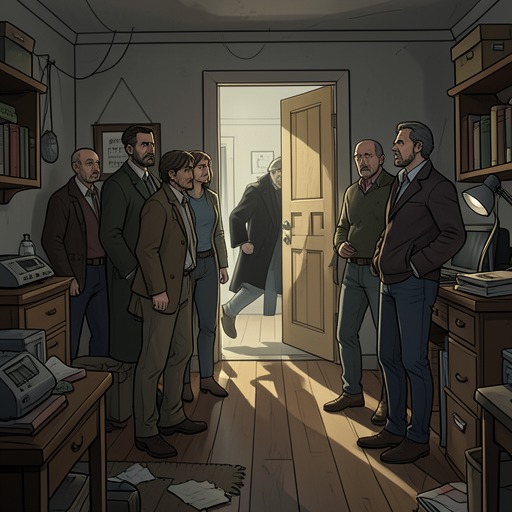
On Easter Sunday night, the residents inferred that a man and woman carrying a flashlight had alerted the police. With the office due to be closed on Easter Monday, they expected that they would be unable to move around until Tuesday morning. The resulting wait was not a brief pause but a period of fear extending through a day and two nights. The residents sat in darkness, whispered, and fell silent whenever they heard a creak. Anne describes the whole group listening as footsteps moved through the house, the private office, and the kitchen, then approached the stairs and rattled the bookcase concealing the entrance.
The danger had a clear precedent in the building’s vulnerabilities. In an earlier break-in, Peter found both the warehouse door and the street door open; the residents followed their standing instructions not to wash or use water, to remain quiet, dress by eight, and avoid the bathroom. The burglars had forced doors with a crowbar and stolen two cashboxes, blank checkbooks, and coupons for 330 pounds of sugar. That incident makes the Easter episode part of a recurring threat to the Annex’s concealment, rather than an isolated disturbance.
Aftermath and changed precautions
After the Easter incident, the residents’ routines were further restricted. Dr. Dussel was to work in the bathroom, Peter was assigned to patrol the house between eight-thirty and nine-thirty, and Peter was no longer allowed to open his window because someone had noticed it. They could not flush the toilet after nine-thirty at night. A night watchman, Sleegers, was hired, and a carpenter from the underground was expected to build a barricade using the residents’ white Frankfurt bedsteads. The group also had to consider whether Sleegers could be trusted, whether dogs would bark at someone behind the door, and how to construct the barricade. Mr. Kugler reproached the residents for carelessness, while Jan warned them not to go downstairs.
These measures translate the threat of discovery into the details of domestic life: where work can be done, when a toilet can be flushed, whether a window can be opened, and who must keep watch. Anne’s reflection on being Jews with no rights but many obligations connects the immediate security crisis to the wider restrictions imposed under German occupation. The hope that the war would end and that Jews would again be treated as people gives the episode a larger significance: the residents’ confinement is both a practical struggle to remain undiscovered and an imposed condition of persecution.